19th Century Rare Burmese Kammavaca Buddhist Manuscript
A Sacred Offering of Ordination and Merit
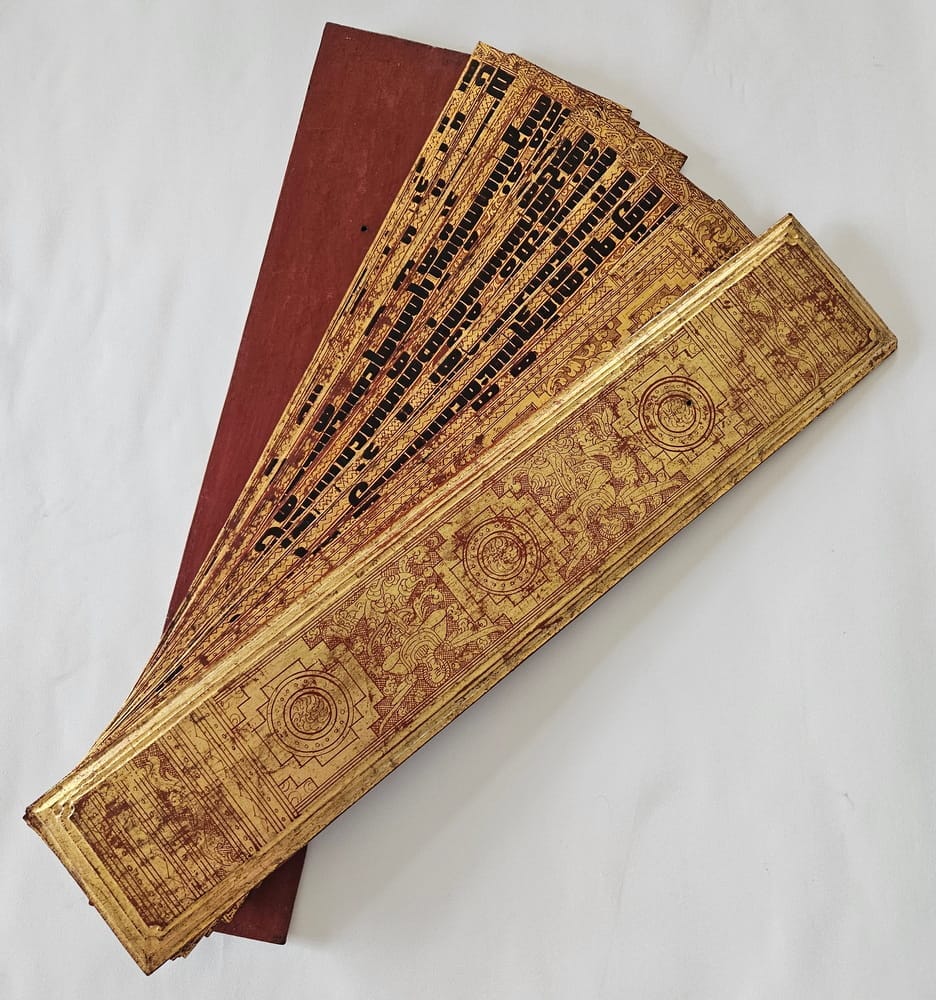
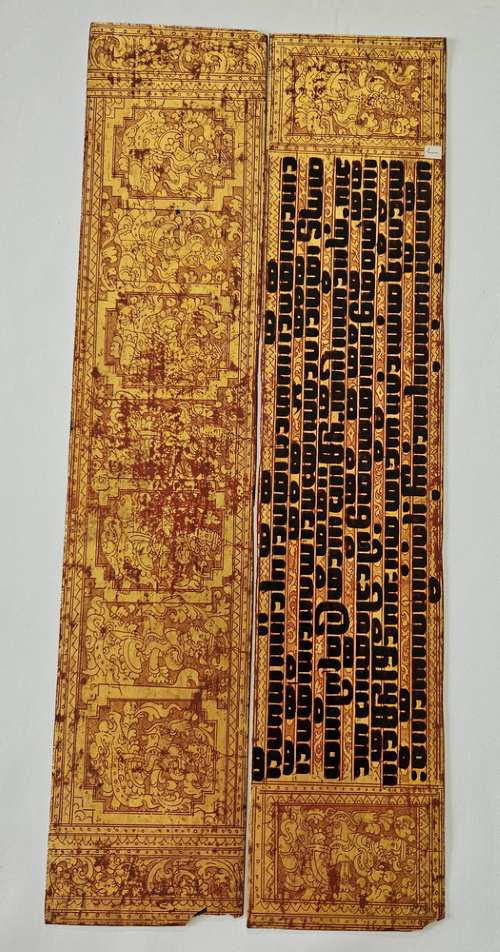
- This 19th Century Rare Burmese Kammavaca Buddhist Manuscript is an exquisite richly gilded and lacquered in traditional Burmese style, embodies the spiritual devotion of Theravāda Buddhist ordination rites. Composed in Pali and inscribed in the elegant tamarind seed script, its panels contain canonical texts from the Vinaya Pitaka—ritual instructions recited during the formal acceptance of a novice into the monastic sangha.
- This manuscript would have been presented by a family during their son’s ordination ceremony, symbolizing both reverence and the accrual of merit. The lavish decoration—gold leaf over red lacquer, bordered in black—reflects the belief that no offering is too beautiful to carry the Buddha’s word.
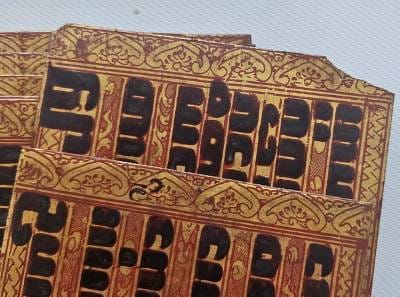
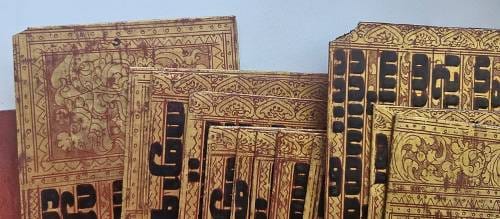
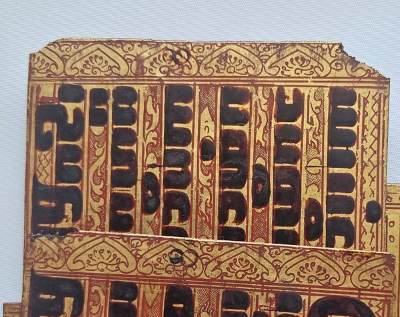
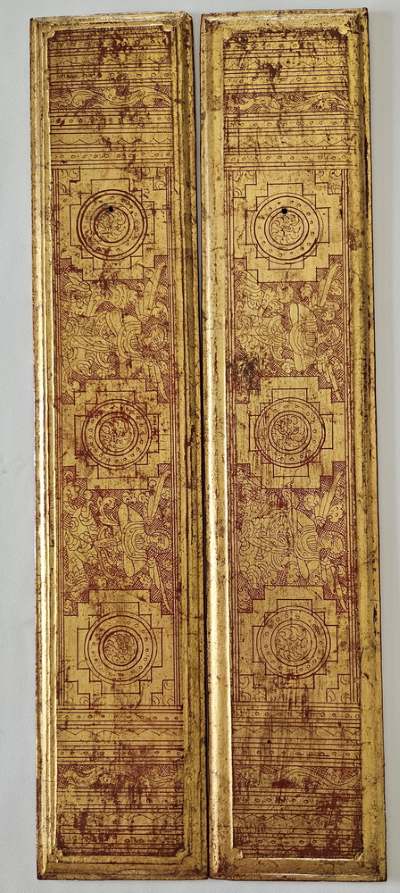
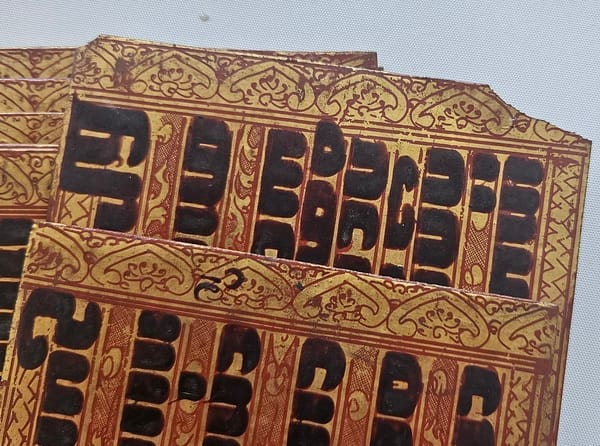
- These manuscripts preserve selected passages from the Vinaya — the monastic code of discipline — and were produced with extraordinary care, transforming sacred text into an object of devotion. This is a well-used 15-page 19th-century Burmese gilded Kammavaca Manuscript, making it an incomplete set; one leaf is missing, traditionally they have 14 or 16 pages. Two wooden decorative end covers hold the pages in place. The corners of six leaves are damages (see images) and aged related wear from over a century of being handled and read by monks.
Burmese Manuscript: Pe Sar & Kammavaca
In traditional Burmese culture, the preservation of knowledge and the pursuit of spiritual merit were elevated to a high art form. While they share a similar physical shape, these two types of manuscripts served very different roles in the library and the temple.
- Pe Sar (Palm Leaf Manuscripts): These were the scholarly workhorses of Southeast Asia. Created from dried Talipot or Palmyra palm leaves, the text was meticulously etched with an iron stylus and darkened with soot. Durable and tactile, these manuscripts house the vast spectrum of Burmese knowledge—from medicinal recipes and historical records to the daily prayers of the Tipitaka. They are valued today for their authentic connection to ancient academic life.
- Gilded Kammavaca: If the palm leaf was the book of the scholar, the Kammavaca was the jewel of the monastery. Reserved strictly for ritualistic purposes—such as the ordination of monks—these are masterpieces of lacquerware and gold leaf. Written in the bold, square “Tamarind-seed” script on heavy lacquered cloth or ivory, the Kammavaca is as much a sacred object as it is a text. Its ornate “shwe zawa” (gold-relief) covers make it a premier choice for collectors of Asian fine art.