

Antique Tibetan Buddhist Manuscript – Pecha
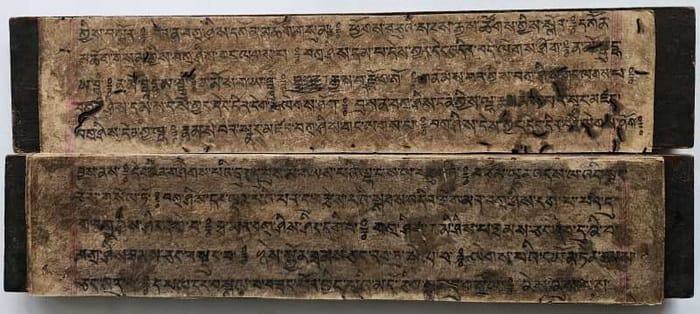
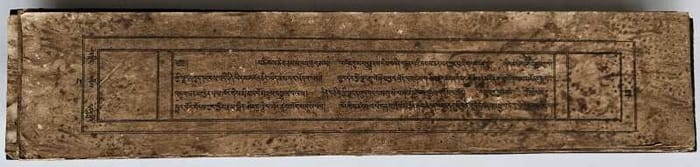
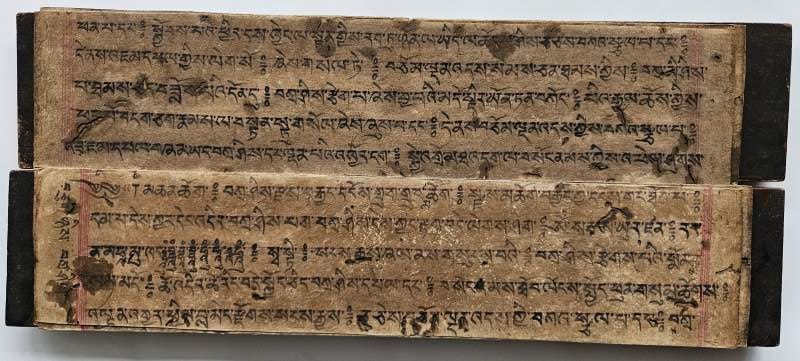
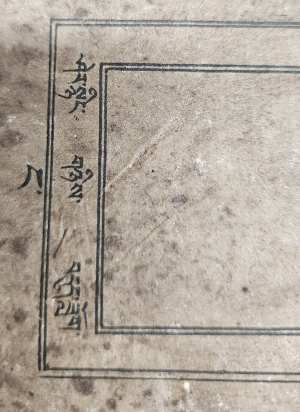
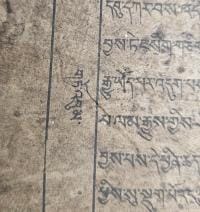
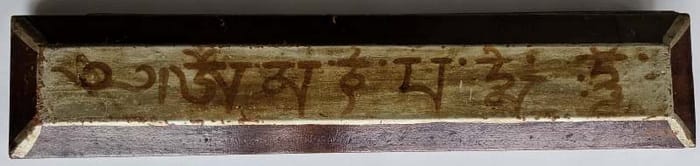
Antique Tibetan Buddhist Manuscript – Pecha used to record the Tibetan Buddhist canon in Tibet, the formal style is known as Uchen (dbu-can). Its name literally means “with a head,” which referrs to the prominent horizontal line at the top of each character. The presence of this specific opening formula (“Bhagavan, Tathagata, Arhat…”) indicates that this is a Sutra (a direct teaching of the Buddha). Because the handwriting is so precise and formal, it is likely a page from the Kangyur (the “Translated Word” of the Buddha), which is the most sacred part of the Tibetan Buddhist Canon.
- The Head Bar: Each letter “hangs” from a thick horizontal stroke. the lines are very straight and uniform.
- Syllabic Structure: Tibetan is not written letter-by-letter in a straight line. Instead, it uses syllabic blocks. You can see “stacks” where some letters are tucked underneath others (subjoined) or placed on top (super-joined).
- Punctuation (The Tsheg): between the clusters of letters there are small, elevated dots (·), this is called a tsheg, and it marks the end of a single syllable.

