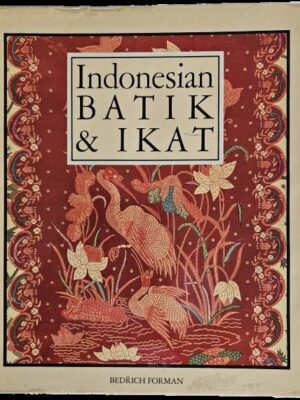
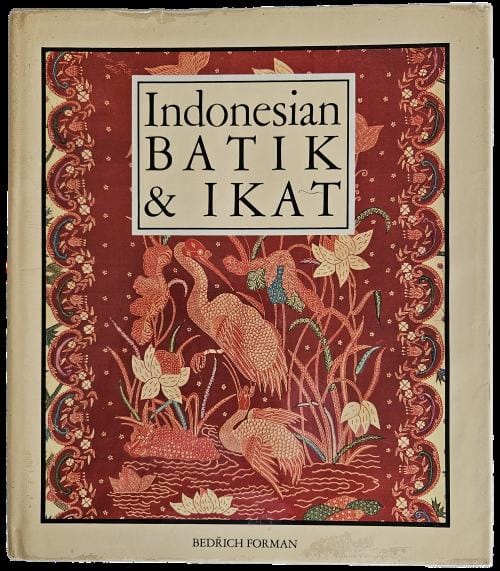




Textile Treasure: Indonesian Batik & Ikat (1988 1st Edition)
This first English edition of “Textile Treasure: Indonesian Batik & Ikat” (1988) serves as a seminal visual record of Indonesia’s most prestigious weaving and dyeing traditions. It was published during a pivotal era for textile scholarship, documenting rare pieces that have since disappeared into private international collections or museums.
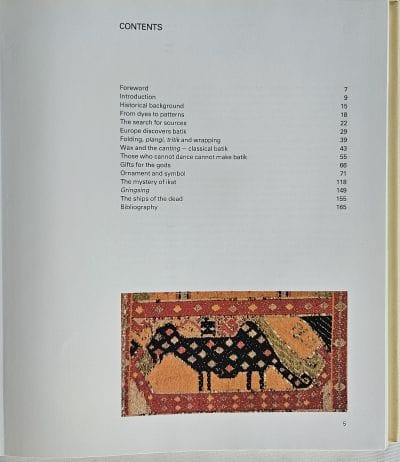
The volume provides a comprehensive overview of the two primary pillars of Indonesian textile art: Batik (wax-resist dyeing) and Ikat (resist-dyeing the yarns before weaving).
- Regional Diversity: The book meticulously catalogues the distinct stylistic differences between the refined, courtly Batiks of Central Java (Solo and Yogyakarta) and the bold, coastal “Pesisir” styles from Cirebon and Pekalongan.
- The Ikat Tradition: It offers a deep look into the complex warp and weft ikats of the eastern islands, including Sumba, Flores, and Timor. These sections explain how the intricate patterns—often featuring ancestral figures or local fauna—act as a “social skin” for the wearer.
- Symbolic Language: You will find explanations of sacred motifs like the Parang (machete) or Kawung (palm fruit) in Batik, and the Patola-influenced designs in Ikat, which were once reserved exclusively for royalty and ritual use.
Technical and Visual Merit
For the collector or dealer, the 1988 edition is valued for its specific archival qualities:
- High-Fidelity Plates: The large-format color photography captures the subtle shifts in natural vegetable dyes, particularly the deep indigo and “soga” (brown) tones that are difficult to reproduce in modern digital printing.
- Technical Diagrams: The book often includes diagrams of the looming and waxing processes, making it a functional reference for identifying authentic hand-drawn Batik Tulis versus later Batik Cap (stamp) or printed imitations.
- Historical Context: Because it was published in the late 1980s, the text captures a snapshot of these traditions before the heavy industrialization of the 1990s, focusing on village-level production and hand-spun cotton.