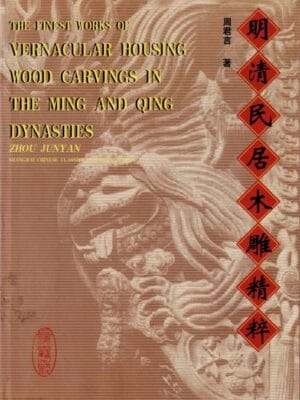
Vernacular Housing Wood Carvings – Ming – Qing Dynasties
Vernacular Housing Wood Carvings – Ming – Qing Dynasties
$60.00
Vernacular Housing Wood Carvings – Ming – Qing Dynasties
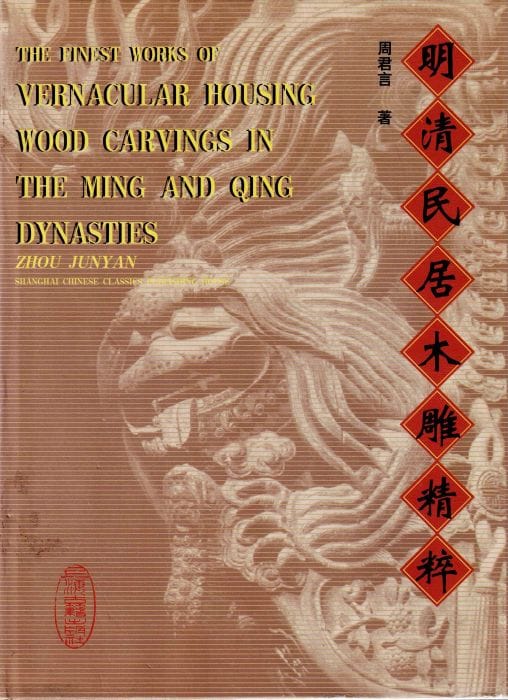
The Finest Works of Vernacular Housing Wood Carvings – Ming – Qing Dynasties by Zhou Junyan (published in 1998) is a highly specialized reference for collectors and architectural historians. It focuses on the ornate wooden elements found in traditional Chinese merchant and scholar homes, primarily from the Huizhou and Jiangnan regions.
Zhou Junyan’s work highlights how wood carvings served as more than just decoration; they were a status symbol for the merchant class who, despite their wealth, were socially lower than the literati.
The “Three Carvings”: While the book focuses on wood, it places these works within the broader “Huizhou Three Carvings” tradition (wood, brick, and stone).
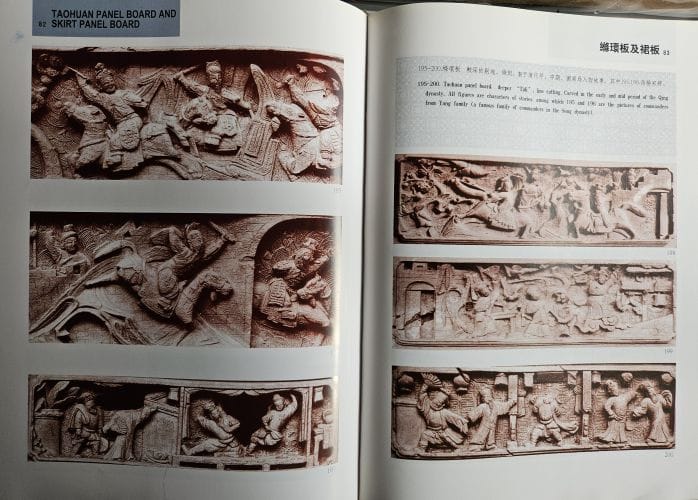
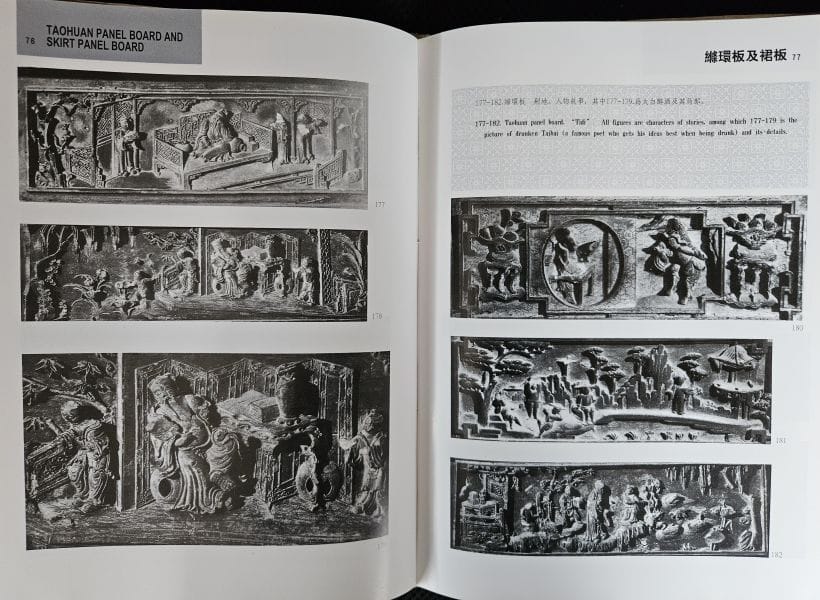
Narrative and Symbolism: Zhou details the use of carvings to tell moral stories. Common themes include scenes from The Romance of the Three Kingdoms, Confucian parables of filial piety, and “auspicious” symbols like bats (happiness) and peonies (wealth).
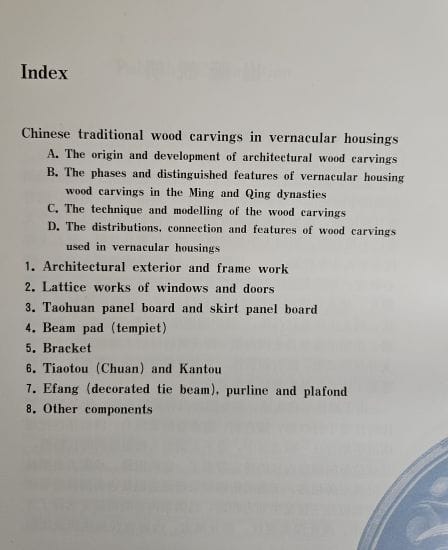
Architectural Integration: The book documents specific structural components that received the most attention:
Sparrow Braces (Que Ti): The decorative brackets between pillars and beams.
Beams and Lintels: Deep relief carvings on the main horizontal supports of the “Skywell” (courtyard) houses.
Vernacular Housing Wood Carvings – Ming – Qing Dynasties
Published: 1998
Publisher: Shanghai Chinese Classics Publishing House
Format: Hard cover with dustjacket – Height: 28.5cm x Width: 22cm x thickness: 2cm
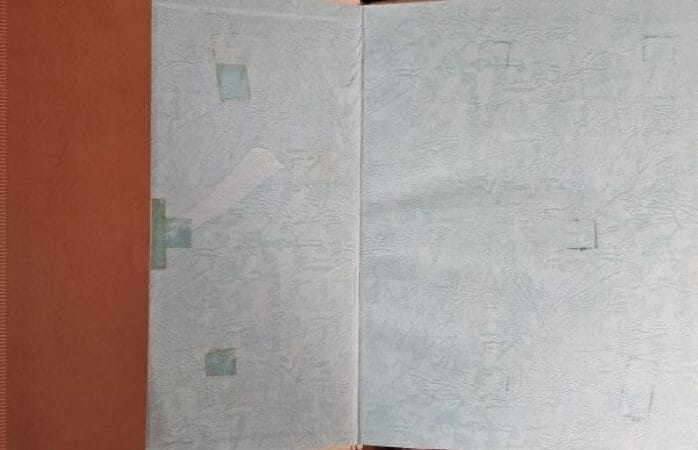
Condition: Dustjacket with slight wear on bottom and top edges with tape marks on the inside cover, otherwise in excellent condition with all pages clean and bright
Vernacular Housing Wood Carvings – Ming – Qing Dynasties
The evolution of style in wood carvings between the Ming and Qing dynasties:
Ming Style: Characterized by “vigorous simplicity.” The carvings are often deeper, with more robust lines and a focus on the natural grain of the wood (typically gingko, camphor, or nanmu).
Qing Style: Known for “exquisite complexity.” During the Qianlong era, carvings became incredibly intricate, often featuring “multi-layered” or “pierced” carving where the scene appears three-dimensional and detached from the background.