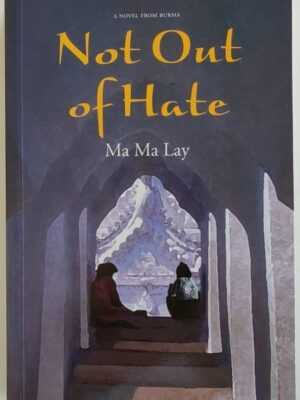
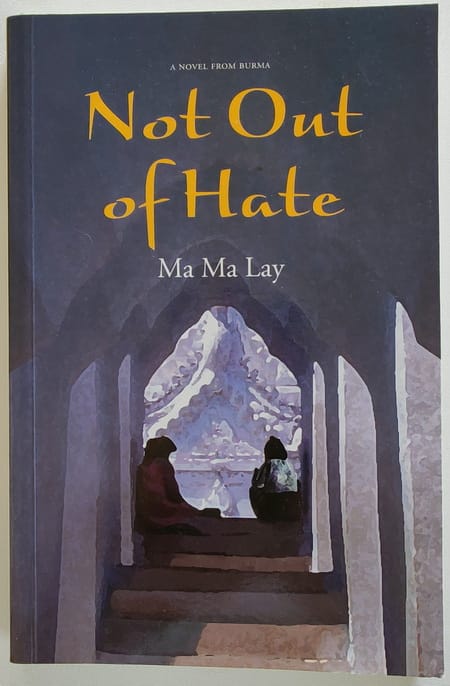


Not out of Hate by Ma Ma Lay
Not Out of Hate (original Burmese title: Mone-Yway-Ma-Hu) by Ma Ma Lay is widely considered one of the most important works of 20th-century Burmese literature. First published in 1955, it is a sophisticated social critique wrapped in a tragic family drama.
The Heart of the Story
The novel centers on Way Way, a young woman from a traditional Burmese household who falls in love with and marries U Saw Han, a Westernized Burmese man working for a British company.
The tragedy is not born from malice—as the title suggests—but from a clash of civilizations. U Saw Han, in his attempt to “elevate” Way Way, systematically strips her of her Burmese traditions, diet, and lifestyle, replacing them with Victorian-era British habits that ultimately lead to her physical and emotional decline.
Key Themes
- Cultural Imperialism: The book explores how colonialism infiltrates the domestic space. It isn’t just about politics; it’s about how foreign influence can alienate individuals from their own heritage.
- Gender and Control: It provides a sharp look at the power dynamics within a marriage, where “love” becomes a justification for total control and the erasure of identity.
- The “Burmese Way”: Ma Ma Lay was a staunch nationalist. Through the narrative, she champions the resilience and health of traditional Burmese culture against the “stiff” and often ill-suited lifestyle of the West.
Why It Is Must-read
For anyone interested in Southeast Asian history and iconography, this book provides the essential “human layer.” While artifacts represent the physical history of the region, Not Out of Hate captures the psychological struggle of the people during a time of immense transition. It is an excellent companion for those documenting the 19th and 20th-century transitions in Burma.